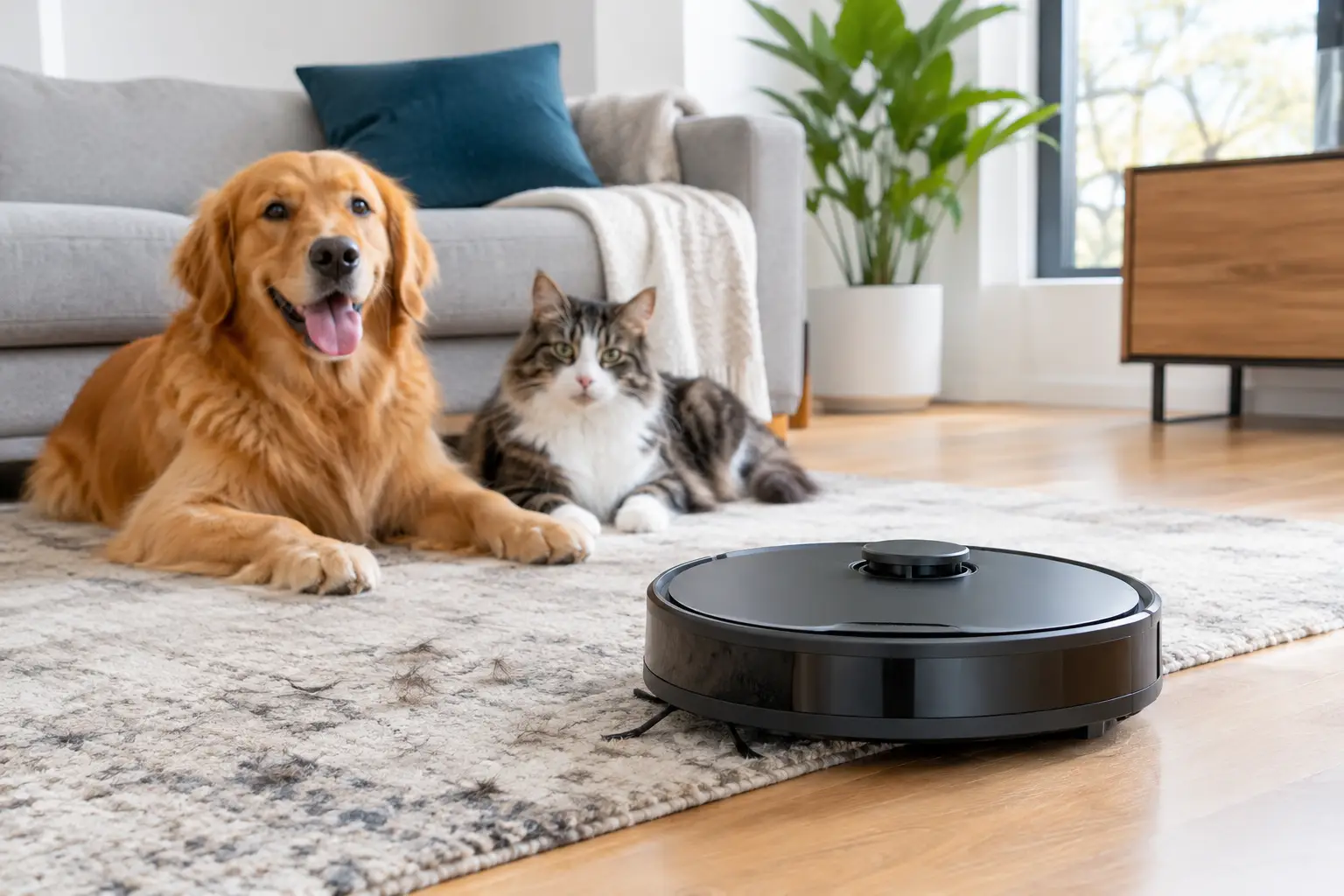
A robot vacuum for pet hair can feel like a small household upgrade until you see what it collects after one run: tumbleweeds under the sofa, kibble near the bowl, litter by the hallway, and the fine fur that somehow reaches every room. For Canadian homes with dogs or cats, the right model saves more than time. It keeps daily mess from turning into a weekend cleaning job.
The best pick is not always the most expensive one. A flashy app and a long feature list will not help much if the vacuum tangles on long hair, misses edges, or gets stuck beneath the dining table. The smart buy is the model that suits your floors, your pet’s shedding level, and how much hands-on maintenance you are happy to do.
What a Robot Vacuum for Pet Hair Needs to Do Well
Pet owners should start with pickup, not gimmicks. Fur behaves differently from ordinary dust. It clings to rugs, wraps around brush rollers, gathers along baseboards, and mixes with dirt in high-traffic areas. A capable robot needs enough suction to lift hair from carpet while keeping a roller brush in contact with hard floors.
Look for a combination brush design or a rubberized roller. Rubber rollers are particularly useful in homes with medium or long-haired pets because hair is less likely to wind tightly around them. No brush is completely maintenance-free, but a roller you can remove and clean in seconds is a much better everyday choice than one that demands scissors and patience every few days.
Navigation matters just as much. Basic random-pattern robots can work in a small apartment with mostly open floors, especially when the price is right. In a larger home, a model that maps rooms and cleans in orderly lines is usually worth the extra cost. It covers more floor with less repeated driving, and you can send it to the kitchen after dinner instead of starting a whole-home clean.
A useful pet-hair robot should also handle thresholds, rugs, and furniture legs without constant rescue. Check the stated climbing height if your home has transitions between rooms. If there are pet beds, cords, or toys on the floor, obstacle detection can reduce frustrating interruptions, although it is not a replacement for a quick tidy before the cleaning cycle begins.
Suction Power Is Only Part of the Story
High suction numbers look impressive, but they do not tell the entire cleaning story. Airflow, brush design, bin capacity, and how closely the robot travels along walls all affect real-world results. A lower-priced model with a strong roller and a sensible cleaning path can outperform a higher-rated machine that scatters debris or leaves fur at the edges.
For homes with mostly hardwood, laminate, vinyl, or tile, prioritize a soft roller, good edge sweeping, and a mop option if you want one machine for routine floor refreshes. For carpeted homes, choose adjustable suction and a roller designed to agitate fibres. Thick area rugs and deep-pile carpet can be tougher, so read the product details carefully rather than assuming every robot works equally well on every surface.
Choose Features That Match Your Home
Before browsing deals, think about where the pet mess actually builds up. A shedding Labrador in a family home creates a different job than one short-haired cat in a condo. This is where a few practical features can make the purchase feel like money well spent.
Self-emptying docks are a major convenience upgrade. The robot returns to its base and empties its small onboard bin into a larger bag or container. For heavy shedders, that means fewer interruptions and less contact with dusty fur. The trade-off is a higher price, more floor space around the dock, and replacement bags for some systems. If you have one pet and do not mind emptying a bin after a run, a standard charging dock may deliver better value.
Room mapping is another feature that earns its place in busy homes. It lets you set no-go zones around food and water bowls, choose carpet boost where it is needed, and schedule a quick pass through the entryway. Multi-floor maps are particularly helpful in townhomes or houses where the robot moves between levels.
Mopping can be handy for muddy paw prints and light kitchen spills, but keep expectations realistic. Most combo robots are best for maintenance cleaning, not scrubbing dried-on messes. If your pet regularly tracks slush, salt, or wet leaves inside during a Canadian winter, you will still want a proper mop for deeper cleanup. A robot mop helps keep the gap between those bigger cleaning sessions manageable.
Consider these priorities when comparing popular models:
- A tangle-resistant roller for long hair and frequent shedding.
- Smart mapping for room-by-room cleaning and no-go zones.
- A self-empty dock if you have multiple pets or limited time.
- Strong edge cleaning for fur along walls, furniture, and baseboards.
- Replaceable filters, brushes, and bags that are easy to find.
That last point is easy to overlook. A great deal loses its shine if routine parts are difficult or costly to replace. Filters need regular cleaning, side brushes wear down, and rollers eventually need attention. Choosing a well-supported model makes ownership simpler over the long term.
Budget, Mid-Range, or Premium?
Budget robot vacuums are a sensible entry point for small spaces, hard floors, and light-to-average pet shedding. Expect basic scheduling, simple navigation, and a smaller dustbin. They can be a good fit for students, condo owners, or anyone who wants help with daily crumbs and loose fur without paying for an automated dock.
Mid-range models often offer the strongest value for pet households. This category commonly adds mapping, better obstacle handling, adjustable suction, app controls, and stronger performance on mixed floors. For many families, these are the features that turn a robot from a novelty into something used several times each week.
Premium robots bring self-emptying, advanced cameras or sensors, more sophisticated mopping, and improved avoidance of pet-related obstacles. They are convenient, but they are not automatically the right deal. Pay for premium features when they solve a genuine pain point, such as a busy schedule, several shedding pets, or a larger home with complicated layouts. If your floors are simple and you are comfortable with basic maintenance, a mid-range model can clean just as reliably for less.
Do Not Ignore Noise and Pet Comfort
Some pets ignore a robot vacuum within days. Others treat it like an unwanted visitor. Noise levels vary by power mode, and maximum suction is usually louder than the everyday setting. Start with short runs while you are home, give nervous pets a quiet room to retreat to, and avoid scheduling cleaning near feeding or nap time.
A robot does not need to run at maximum power every day. Daily low or medium passes can keep loose fur under control, while a stronger run once or twice a week tackles carpets and busy areas. This approach is quieter, more energy-conscious, and often helps the robot maintain better coverage between deeper cleans.
Set It Up for Better Results
The first few cleaning cycles are when many buyers decide whether they love their new gadget. Give the robot a fair start. Place the dock against a clear wall with open space around it, let the machine complete its initial map, and remove obvious cable clutter. If the app allows it, name rooms and create no-go areas after the map is accurate.
Keep the floor routine simple. Pick up charging cables, lightweight pet toys, and anything with tassels or long strings. Empty the robot’s bin or check the dock regularly at first, especially during shedding season. Cleaning the roller and filter on schedule keeps suction from fading and prevents the machine from working harder than it needs to.
For the best results, treat a robot vacuum as your daily fur patrol, not your only cleaning tool. It handles the repeatable mess brilliantly, while an upright vacuum, handheld tool, or mop can take care of stairs, upholstery, corners, and the occasional serious spill.
A good robot vacuum earns its spot by making your home feel cleaner on ordinary Tuesday mornings, not just after a full-house cleaning session. Compare the features that solve your biggest pet-hair headache, watch for a deal that fits your budget, and choose the machine you will actually run often.