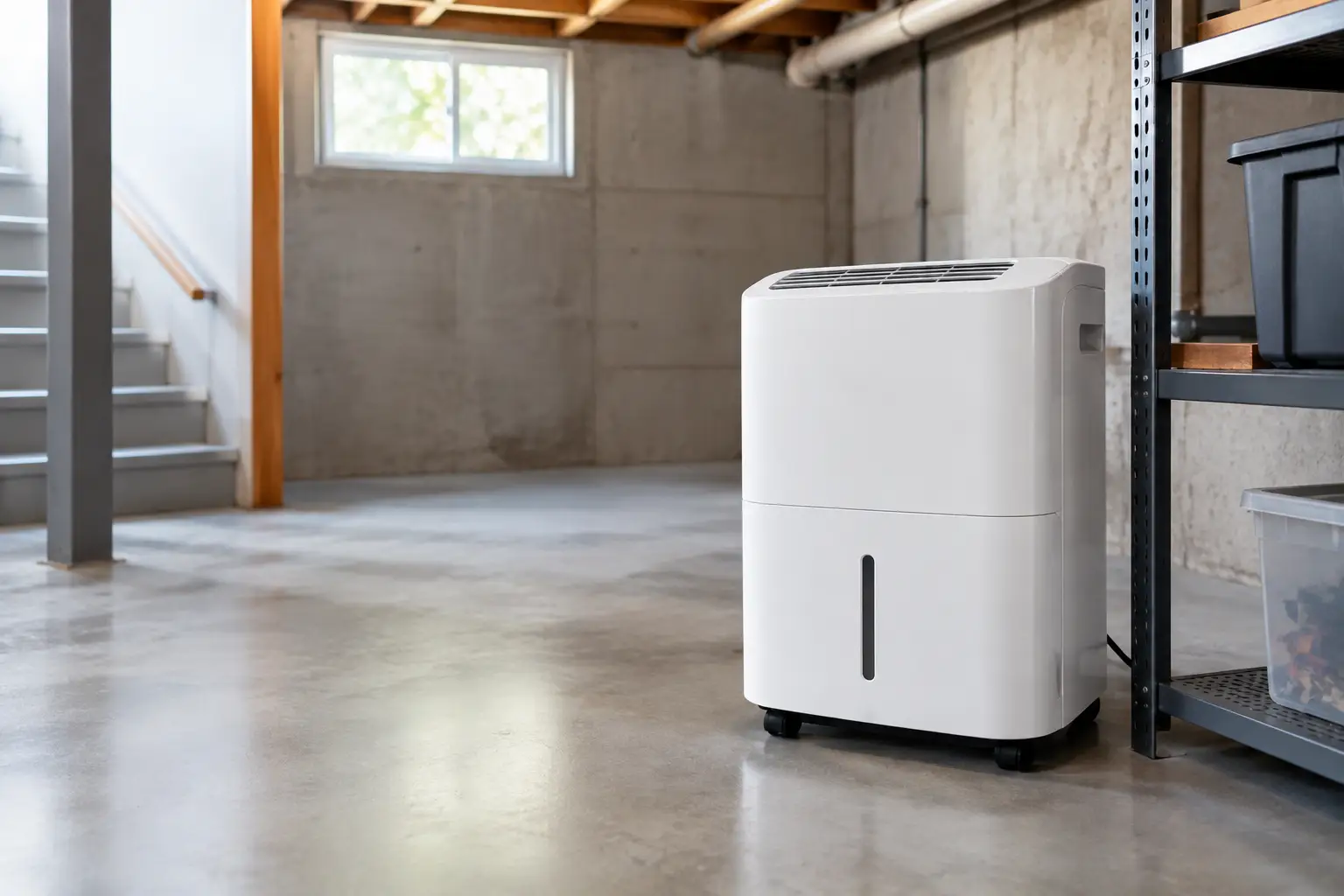
A damp basement rarely announces itself with a puddle. More often, it is the musty smell when you open the door, cool clammy air around stored boxes, or that faint spotting on a wall near the floor. A dehumidifier for basement moisture can make the space more comfortable and protect the things you keep downstairs, but only when its capacity and drainage setup match the job.
For Canadian homes, this is more than a summer issue. Spring thaw, heavy rain, humid July days and a cool concrete foundation can all add moisture to a lower level. Whether the basement is a laundry room, home gym, gaming zone, workshop or storage area, buying the right unit saves the frustration of emptying a tiny bucket every day while the air still feels damp.
Start With the Source of Basement Moisture
A dehumidifier removes water from the air. It does not repair a foundation crack, redirect rainwater, stop a leaking pipe or fix poor grading outside the home. If water is entering in visible amounts, address that problem first. Otherwise, even a large unit may run constantly without bringing humidity under control.
Look for simple clues before shopping. Condensation on windows or pipes, a mildew smell, peeling paint, warped cardboard and rusty tools all point to excess humidity. A small digital hygrometer is an affordable add-on that takes the guesswork out of it. In most finished and storage basements, a relative humidity reading between 40 and 50 percent is a practical target. Above 60 percent, mould growth and musty odours become more likely.
There is a useful distinction here. If your basement feels mildly damp during humid weather, a dehumidifier may be the main answer. If it smells musty year-round or gets wet after rainfall, treat the appliance as part of the solution, not the entire fix.
How Big Should a Dehumidifier for Basement Moisture Be?
Capacity matters more than flashy extras. A unit that is too small may be cheaper at checkout, but it can run non-stop, fill quickly and struggle through the muggiest weeks of summer. For a typical Canadian basement with noticeable dampness, a larger portable unit is usually the better value.
Manufacturers often rate modern models by litres removed per day, although listings may also use older pint-based descriptions. Product ratings are tested under specific conditions, so think of them as a comparison tool rather than a promise that the machine will collect exactly that amount every day.
For a compact, slightly damp basement room, a smaller unit can work well. A full basement, laundry area or space with persistent mustiness generally calls for a medium to high-capacity option. Choose more capacity if ceilings are high, the layout is open, the basement is unfinished, or you regularly dry laundry indoors. It is usually easier for an oversized unit to cycle down than for an undersized one to catch up.
Do not rely only on square footage. A 700-square-foot finished rec room with insulated walls is very different from a 700-square-foot concrete basement full of storage bins and exposed pipes. Moisture level, temperature, airflow and the way you use the room all change the calculation.
Basement Temperature Changes the Decision
Most portable dehumidifiers are designed for relatively warm indoor areas. In a chilly basement, especially one that drops near 15 C, performance can slow and frost may form on the coils. Models with auto-defrost are a smart choice for cool spaces, but they still work best when the room stays within the manufacturer’s stated operating range.
If the basement is consistently cold, improve heating or insulation where practical and check whether a low-temperature model is better suited to the space. Buying the biggest standard unit is not always the answer if the air is too cold for it to work efficiently.
Drainage Is the Feature You Will Appreciate Most
The water bucket is the everyday reality of a portable dehumidifier. In a truly damp basement, it can fill faster than expected. If you want a set-it-and-forget-it setup, prioritize continuous drainage.
A gravity drain lets water flow through a hose into a floor drain, sump pit or another lower drain point. This is usually the simplest option, but the hose must slope downward all the way. Keep it secure, avoid kinks and check it occasionally so a blockage does not send water onto the floor.
If the available drain is higher than the unit, choose a model with a built-in condensate pump. That pump can move water upward through a hose, making it useful near a laundry sink or when the floor drain is not conveniently located. It costs more, and pumps add one more part that can require maintenance, but the convenience can be worth it for busy households.
No drain nearby? Choose a model with a large, easy-to-remove bucket, a clear full-tank indicator and automatic shutoff. Auto-restart is also handy after a brief power outage, particularly if you travel or use the basement mainly for storage.
Features Worth Paying For
The best deal is not automatically the lowest price. A few practical features make a noticeable difference in basement use.
A built-in humidistat allows you to set a humidity target rather than running the unit at full power all day. Look for adjustable settings, ideally down to around 40 percent, plus an automatic mode that cycles the compressor as needed. This helps manage electricity use while keeping the air steady.
A washable air filter is another useful feature. It catches dust and lint, especially valuable near a furnace or laundry area, and is cheaper to maintain than disposable filters. It is not a replacement for a dedicated HEPA air purifier if allergies are the main concern, but it helps keep the dehumidifier working properly.
Noise matters if the basement is a home office, media room or guest space. Compressor models create a steady fan and motor sound, so check the listed decibel rating and shopper feedback rather than expecting silence. A slightly louder unit in a utility corner may be fine. In a gaming room, quieter operation may justify paying more.
Smart controls, app access and voice-assistant compatibility are convenient for checking humidity from upstairs, but they should come after capacity, drainage and reliability. For most households, a solid humidistat and a continuous-drain option provide more day-to-day value than advanced connectivity.
Placement and Setup Make a Real Difference
Give the unit room to breathe. Place it away from walls, furniture and stacked boxes so air can circulate around the intake and exhaust. The exact clearance varies by model, so follow its manual, but cramming a dehumidifier into a tight storage nook reduces its effectiveness.
Set it on a level, stable floor near the dampest area, ideally near a drain if you are using a hose. Keep doors and windows closed while it runs. Leaving a basement window open on a humid day simply brings more moisture inside and makes the machine work harder.
For a large or divided basement, one unit may not reach every corner. Start with it in the area that has the highest humidity reading. If one closed room remains damp, run the machine there for a few days or improve airflow with an open door and a fan. A second unit is sometimes justified, but only after confirming that water intrusion or poor ventilation is not the larger problem.
Keep It Working Through the Season
A little maintenance protects your purchase. Clean the filter on the schedule recommended by the manufacturer, wipe dust from the exterior and inspect the drain hose for buildup or loose connections. If you use the bucket, wash and dry it regularly to prevent odours.
At the end of the humid season, empty the unit completely and let it dry before storage. If it has been transported or tipped, let it stand upright for the recommended time before switching it on. This gives the refrigerant system time to settle.
For a basement that needs help year after year, pair the appliance with practical moisture control: run bathroom and kitchen exhaust fans, vent the dryer outdoors, insulate sweating pipes and keep outdoor grading moving water away from the foundation. These steps reduce the workload, which can mean lower energy use and a longer life for the unit.
A good basement dehumidifier should fade into the background. Pick one with enough capacity, a drainage method you will actually use and controls that fit your space, then let it do the quiet work of making the lower level feel like part of the home again.