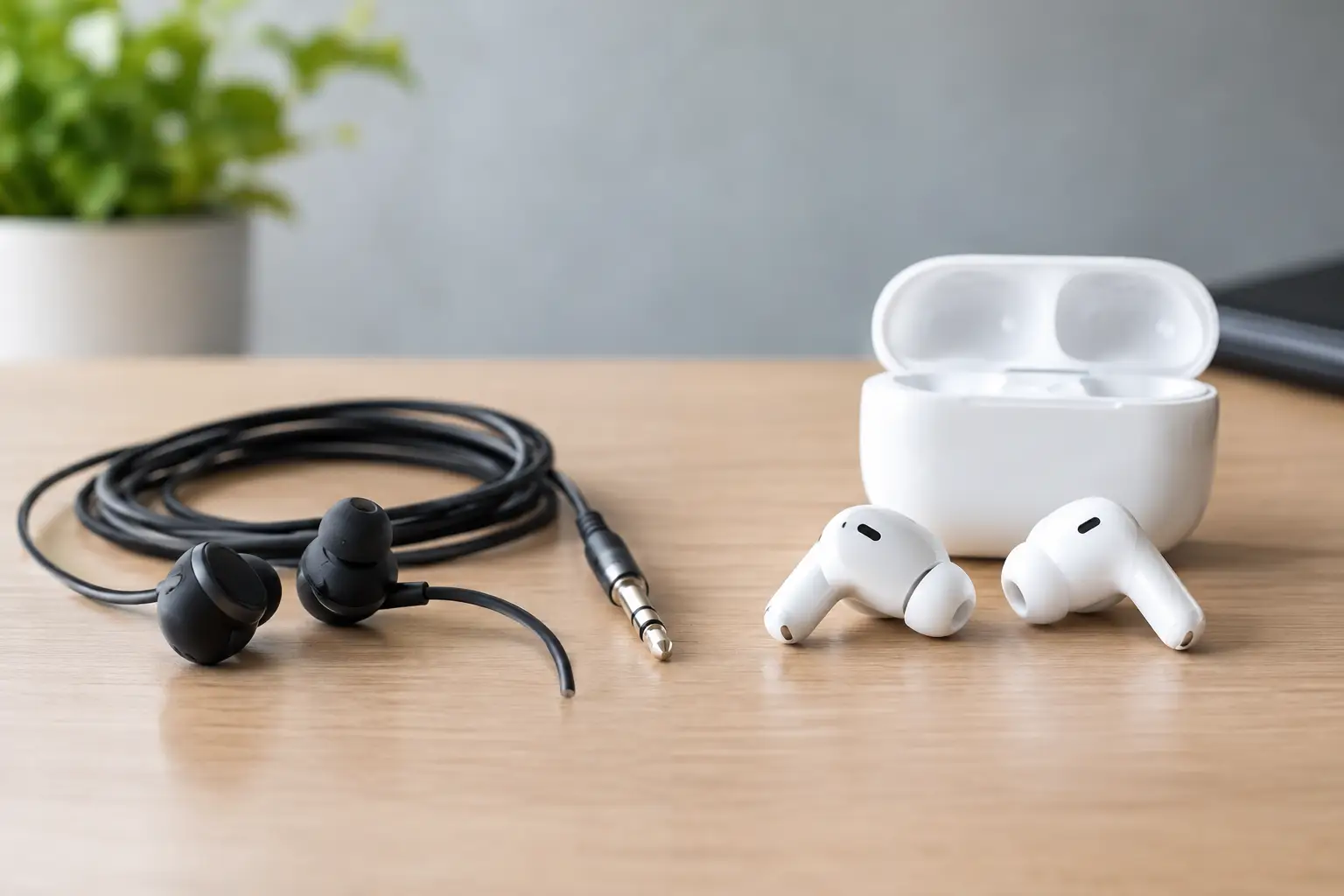
A dead earbud battery halfway through a commute can make a cheap wired pair look very appealing. On the other hand, catching a cable on your coat, backpack, or treadmill is enough to remind anyone why wireless took over. The wired vs wireless earbuds choice is less about declaring one winner and more about matching the gear to how you actually listen.
For Canadian shoppers comparing popular audio products and everyday deals, the best value is not always the lowest sticker price. It is the pair you will use comfortably, reliably, and often – whether that means music between classes, calls from a home office, podcasts on the bus, or late-night gaming.
Wired vs Wireless Earbuds: The Fast Answer
Choose wired earbuds if you want the lowest cost, no charging routine, dependable sound with minimal delay, and a simple backup pair for travel. They are especially useful for gaming, older devices with a headphone jack, and anyone who would rather plug in than troubleshoot Bluetooth.
Choose wireless earbuds if convenience is your priority. They are easier to wear while walking, commuting, working out, and taking calls. Most current phones are designed around wireless audio, and even affordable true wireless models now offer useful features such as touch controls, charging cases, multiple microphones, and noise cancelling.
If you use earbuds for several hours most days, wireless is usually the more convenient everyday purchase. If your budget is tight or you need zero-lag audio, wired still delivers impressive value.
Sound Quality: The Cable Still Has an Edge
A wired connection sends audio directly from your device to the earbuds. There is no Bluetooth compression, no connection handshake, and no wireless signal to manage. With a good source and a decent pair of earbuds, that can mean clearer detail, firmer bass, and a more consistent listening experience.
That does not mean every wired pair sounds better than every wireless pair. A poorly tuned wired model can sound thin or muddy, while a well-made wireless pair can be lively, balanced, and enjoyable. Fit matters just as much. Earbuds that seal properly in your ears tend to produce fuller bass and block more outside noise than loose-fitting models, regardless of connection type.
Wireless audio has improved quickly. Many listeners will not notice a major difference while streaming music, watching videos, or listening to podcasts. For casual listening, comfort and fit may matter more than chasing technical audio advantages. But if you listen closely to high-quality music files or want the most direct signal possible, wired is the better bet.
What about noise cancelling?
Active noise cancelling is mainly a wireless-earbud feature, especially in the budget-to-premium range. It uses microphones and processing to reduce steady background sound such as airplane cabin noise, bus engines, and office HVAC hum. It will not erase every conversation or sudden sound, but it can make commutes much more pleasant.
Wired earbuds generally rely on passive isolation: the physical ear tips create a seal that reduces outside noise. A secure in-ear fit can still work very well, and it does not consume battery power. For noisy travel, however, wireless earbuds with effective active noise cancelling are often worth the extra spend.
Battery and Charging: Convenience Has a Catch
The strongest argument for wired earbuds is wonderfully simple: they do not need to be charged. Keep them in a bag, plug them in, and they work. That reliability is valuable during a long travel day, a power outage, or a busy week when charging another device feels like one task too many.
Wireless earbuds depend on both the buds and their case. Many pairs offer enough listening time for a workday with top-ups from the case, but capacity declines as batteries age. Cold Canadian winters can also shorten battery performance temporarily, so it is smart to keep the case warm in a pocket rather than leaving it in a freezing car.
Charging is easy when it becomes part of your routine. Put the buds back in their case after use, charge the case overnight or every few days, and you will rarely run into trouble. Still, a wired pair makes an excellent low-cost backup. It is one of those small purchases that can save a long flight or an important call.
Comfort, Exercise, and Daily Use
Wireless earbuds are built for movement. No cable runs from your ears to your phone, which makes them more comfortable for workouts, dog walks, cooking, and quick errands. Many models include sweat resistance, compact cases, and controls that let you pause music or answer a call without digging for your phone.
For gym use, look beyond the words “sport earbuds.” A stable fit matters most. Some people prefer a small, low-profile earbud; others need ear fins or hooks for running. If a model includes several ear-tip sizes, take a few minutes to test them. The right size improves comfort, bass response, microphone performance, and noise isolation.
Wired earbuds can be surprisingly practical at a desk. The cable is not a problem when you are sitting still, and an in-line remote can make volume and call controls quick to reach. They are also harder to lose individually. True wireless earbuds are tiny, and one missing bud can turn a good deal into a frustrating replacement purchase.
Calls, Video, and Gaming
For calls, wireless earbuds are convenient but not automatically better. Microphone quality changes widely between models. Some earbuds sound clear in a quiet room but struggle with wind, traffic, or a crowded coffee shop. Models with multiple microphones and voice-noise reduction can help, though expectations should stay realistic at lower prices.
Wired earbuds often provide steady call quality because there is no wireless connection competing for stability. The microphone placement matters, however. A cable microphone closer to your mouth may sound more natural than microphones built into small wireless buds.
Gamers and frequent video-call users should think about latency. Wireless earbuds can introduce a slight delay between what is on screen and what you hear. Phones and apps often compensate well for movies, but the delay can be more noticeable in competitive gaming, rhythm games, or live monitoring. Wired earbuds are the straightforward choice when timing matters.
There is one compatibility check worth making before you buy: many newer phones no longer have a 3.5 mm headphone jack. Wired earbuds may require a USB-C, Lightning, or headphone adapter connection. Make sure the connector matches your device, especially if you plan to use the earbuds with a phone, laptop, tablet, and gaming handheld.
Price and Long-Term Value
Wired earbuds remain one of the best bargains in personal tech. A modest budget can buy a comfortable, good-sounding pair with no battery to replace and no case to charge. They are ideal for students, families buying spares, and shoppers who need practical audio without paying for extra features.
Wireless earbuds cost more because they include batteries, Bluetooth hardware, microphones, charging components, and often noise-cancelling technology. The good news is that the category is packed with competitive choices. You do not have to buy the most expensive pair to get enjoyable sound, dependable controls, and useful all-day convenience.
When comparing prices, consider what you are paying for. Spending a little more can be worthwhile for a better fit, longer battery life, a sturdier case, and stronger call performance. Paying extra only for a fashionable name is less compelling if the earbuds will mostly be used for casual music and podcasts.
How to Pick the Right Pair
Start with the moment you use earbuds most. If you commute, exercise, and take calls on the move, wireless earbuds are likely the better everyday option. Prioritize fit, battery life, sweat resistance, and a case you will actually remember to carry.
If you work at a computer, travel with a laptop, play mobile games, or want a worry-free spare set, wired earbuds make a lot of sense. Prioritize connector compatibility, a comfortable tip design, cable durability, and an in-line microphone if you take calls.
For many households, the smartest answer is both. A wireless pair handles daily convenience, while an affordable wired pair lives in a backpack, desk drawer, or travel pouch. That gives you music when you want it without turning a low battery notification into a problem.
The best earbuds are the ones that fit your routine, not the ones with the longest feature list. Check current options, compare the features you will genuinely use, and choose the pair that makes every commute, call, playlist, or workout easier to enjoy.